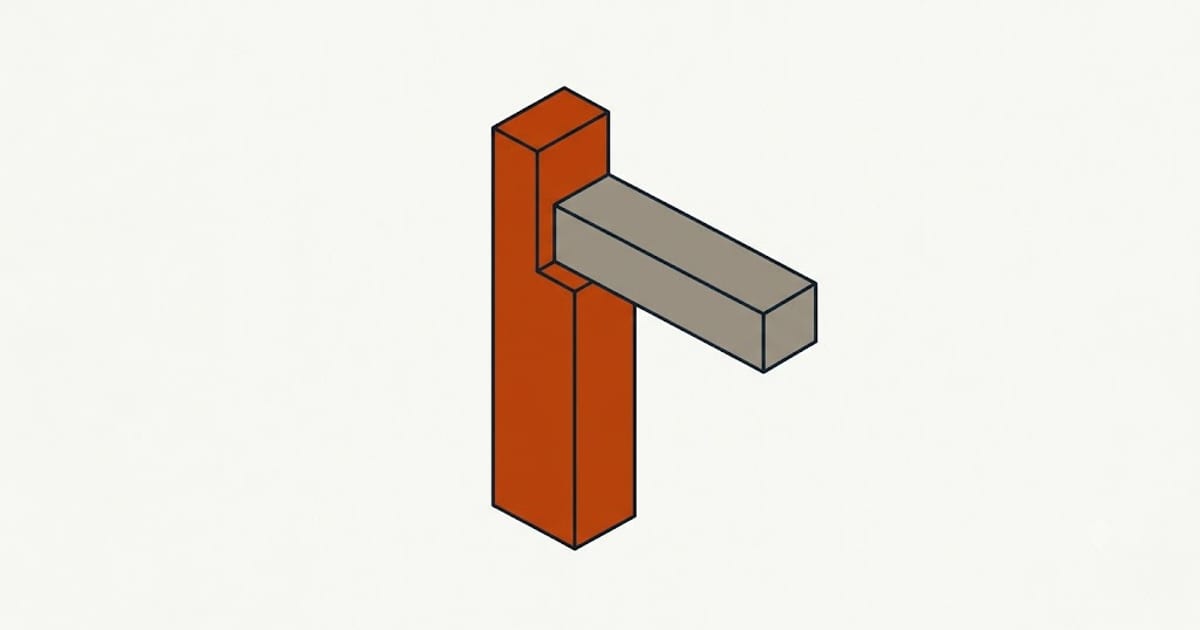
There are two acceptable ways to land a beam on a post, and one common way that is not acceptable at all.
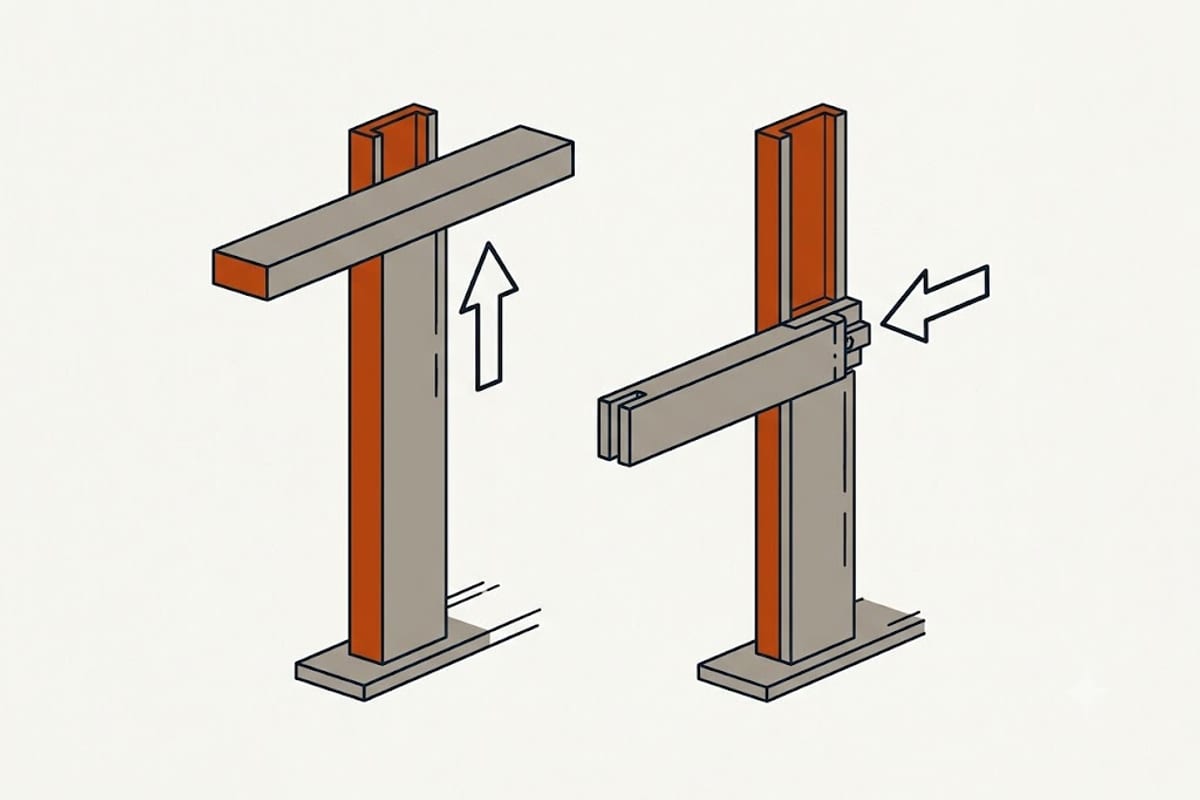
Wood has to bear on wood
The principle behind the rule: the load path should go through wood in compression, not through steel in shear. Wood in compression is enormously strong and predictable. A bolt loaded sideways in a wet, cycling, outdoor timber connection is neither.
A beam bolted to the side of a post is carried entirely by the bolts, and the wood around each bolt crushes and elongates over years of loading and moisture cycling. It looks fine the whole time.
Option one: notch the post
Cut a step from the top of a 6x6 post so the beam sits in it, bearing on the horizontal cut, with the remaining post section against the beam face. Bolts then hold the beam in position rather than hold it up.
The reason the code specifies 6x6 for this is arithmetic: notching a 4x4 for a 3-inch built-up beam leaves about half an inch of post, which is not a column any more. A 4x4 cannot be notched, and this is the most common defect in owner-built decks.
The notch must be cut cleanly and the beam must actually bear on it — a beam sitting a quarter inch proud of the notch is a bolted connection with a decorative step.
Option two: a post cap
A galvanised or stainless steel post cap wraps the top of the post and the bottom of the beam, transferring the load in bearing and resisting uplift and lateral movement.
This is the required approach for 3-ply beams, because notching a post deeply enough to seat three plies removes too much column. It is also the only way to use a 4x4 post at all, and even then the connector's rated capacity governs.
Use the fasteners the connector manufacturer specifies. A structural connector filled with the wrong nails carries a fraction of its rated load, and roofing nails in a joist hanger is a defect an inspector will find in seconds.
Corrosion is not optional to think about
Preservative-treated lumber is corrosive to ordinary steel. Connectors and fasteners must be rated for contact with treated wood — hot-dip galvanised to the connector manufacturer's specification, or stainless within a mile or so of salt water.
Electroplated zinc fasteners in treated wood fail. It takes a few years and it happens out of sight inside the connection.
Post to footing, the other end
The same logic applies at the bottom. The post must bear on the footing through a post base that holds it slightly above the concrete, so end grain is not sitting in standing water.
A post set directly on concrete wicks water into the end grain and rots from the bottom up. A post set in concrete is worse — it is permanently wet and cannot be inspected or replaced.
The base also resists uplift, which matters more than people expect on a deck with a roof over it.
What to check on an existing deck
Look at the top of every post. You want to see either a notch with the beam clearly seated in it, or a metal cap.
If you see a beam on the side of a post held by two bolts, that deck is carrying its load on the bolts. It may have done so for twenty years. It is still the connection to fix first, and on a deck more than a few feet off the ground it is worth doing before the next gathering rather than after.