Stairs & Railings
Stringer layout, rise and run, and the guard height code requires.
Stairs and guards are the two parts of a deck an inspector measures rather than eyeballs, and the two parts most likely to fail an inspection on a frame that is otherwise fine.
Rise and run
The IRC allows a maximum riser of 7 3/4 in and a minimum tread depth of 10 in for stairs serving a dwelling. Both are hard limits.
The tighter rule is the one about consistency: the difference between the tallest and shortest riser in a flight may not exceed 3/8 in. That is what turns stair layout into arithmetic rather than eyeballing.
Total rise ÷ 7.75, rounded up, gives the number of risers. Total rise ÷ that number gives the actual riser height, and it is the same for every step by construction.
A deck 44 in above grade: 44 ÷ 7.75 = 5.7, so 6 risers at 7.33 in each, and 5 treads. The bottom riser is measured to the finished surface of the landing — a pad poured after the stringers were cut is the classic way to end up with one riser 2 inches off.
Stringers
Cut from 2×12, and what is left behind the notch — the throat — must be at least 5 in. Cut a 7 3/4 in rise and a 10 in run out of a 2×12 and there is not much 2×12 remaining, which is why stringer spacing is 16 in on center for most decking and 12 in for thin composite boards that sag between supports.
Composite manufacturers publish their own stringer spacing. It is usually tighter than lumber, and it governs.
Guards
Required when the walking surface is more than 30 in above grade, measured within 36 in horizontally of the edge. Residential guard height is 36 in minimum; stair guards may be measured to 34 in above the tread nosings.
The opening rule is the one that decides baluster count: no 4 in sphere may pass through any opening in the guard. On stairs, a 6 in sphere may not pass through the triangle formed by the tread, riser and bottom rail.
Baluster count
Divide the clear run by 4 in and round up, then add one. Balusters at 4 in on center leave roughly 2.5 in of clear space with a nominal 1.5 in baluster — safely under the rule and the spacing most rail systems ship for.
What to check before cutting
Whether there is a landing at the bottom. It must be at least as deep as the stair is wide, and it is required whether or not there is a door.
3 articles
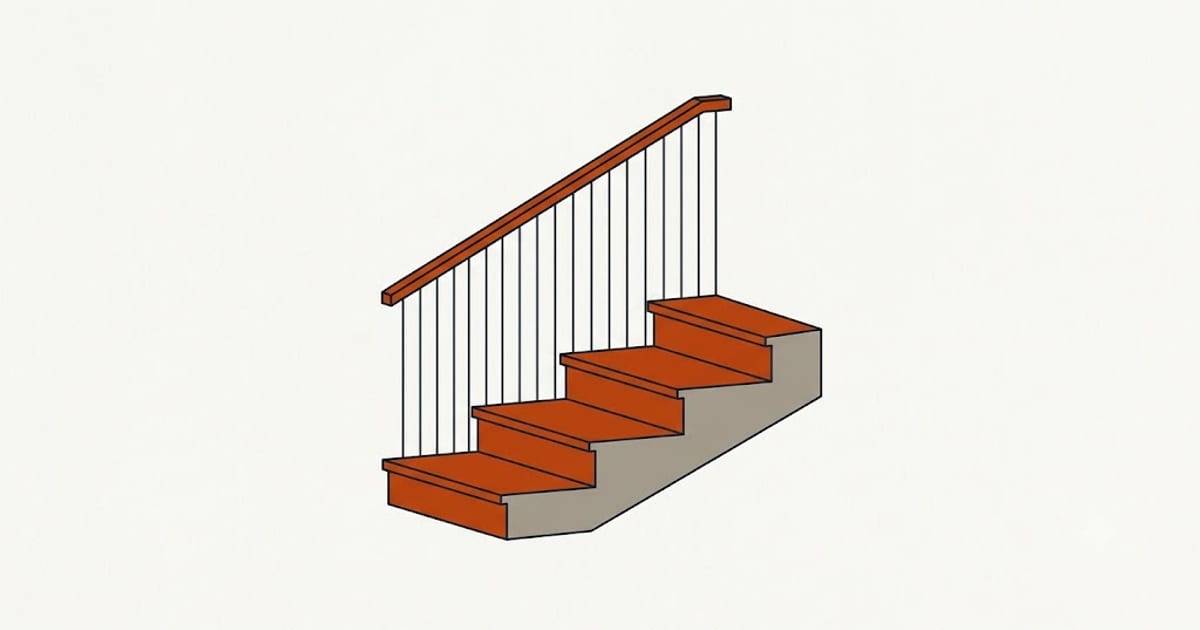 Deck Stair Railing Cost by Material, and the Code That Sets the Design
Railing is priced per linear foot and specified by code. Most of the cost difference between quotes is which of the two rules the builder read.
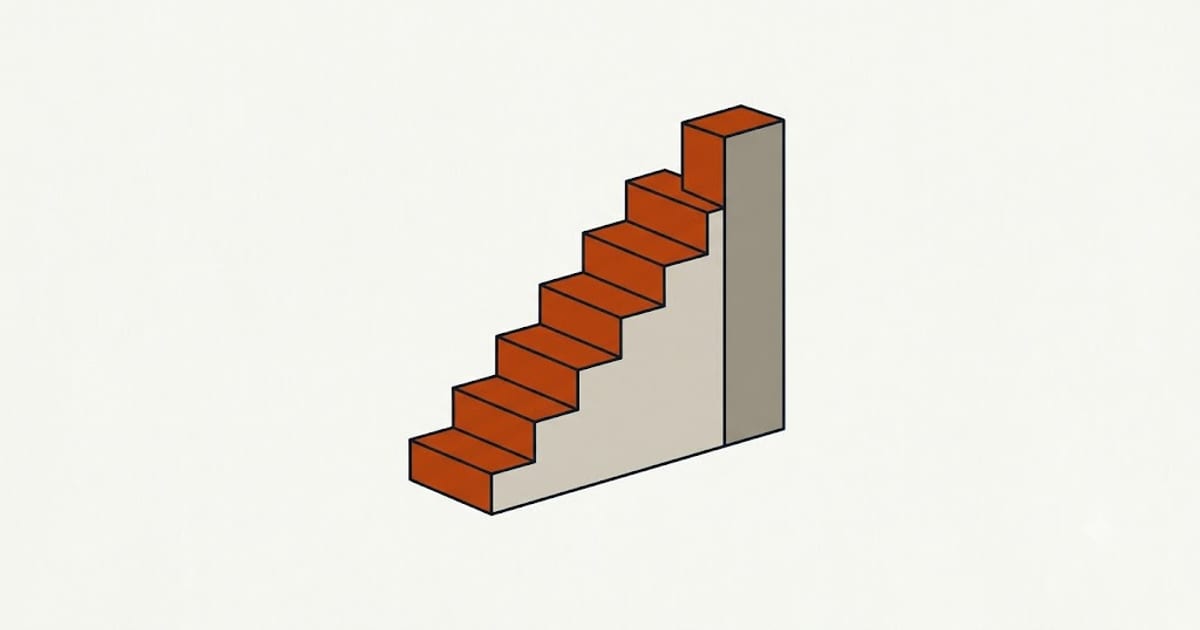 Deck Stair Rise and Run: The Limits, and the 3/8 Inch That Fails Inspections
Stairs fail inspection more often for being uneven than for being too steep, and the tolerance is three eighths of an inch across the whole flight.
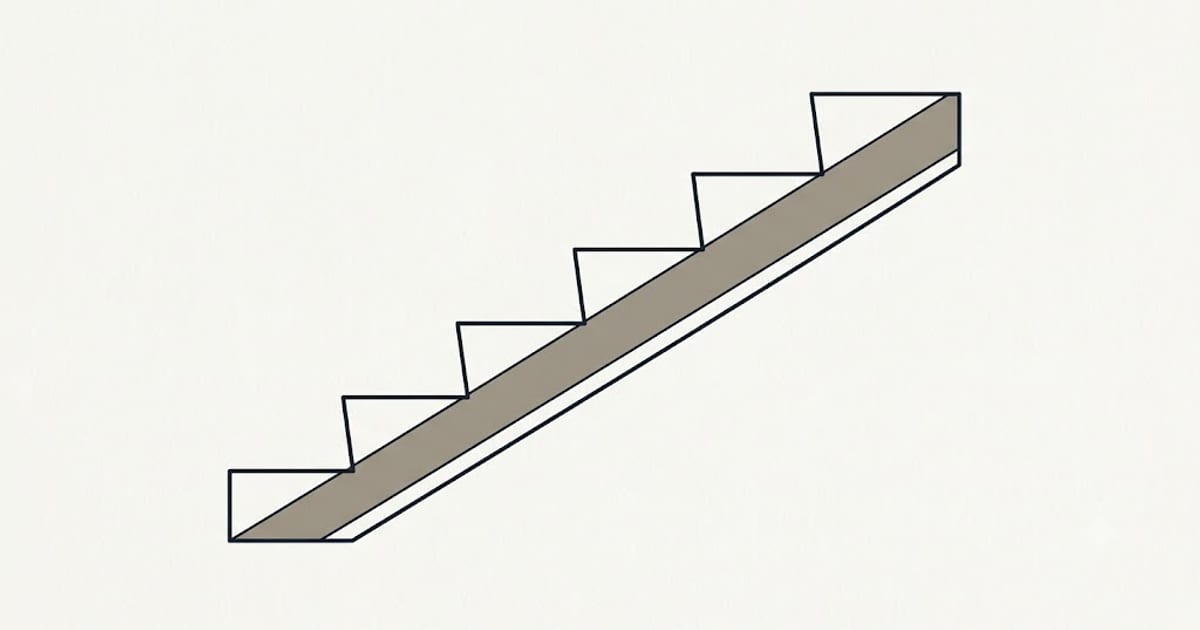 Deck Stair Stringer Layout: Marking, Dropping, and the Throat That Has to Survive
Two things ruin a set of stringers: forgetting to drop the bottom riser, and cutting so deep that nothing structural is left behind the notches.