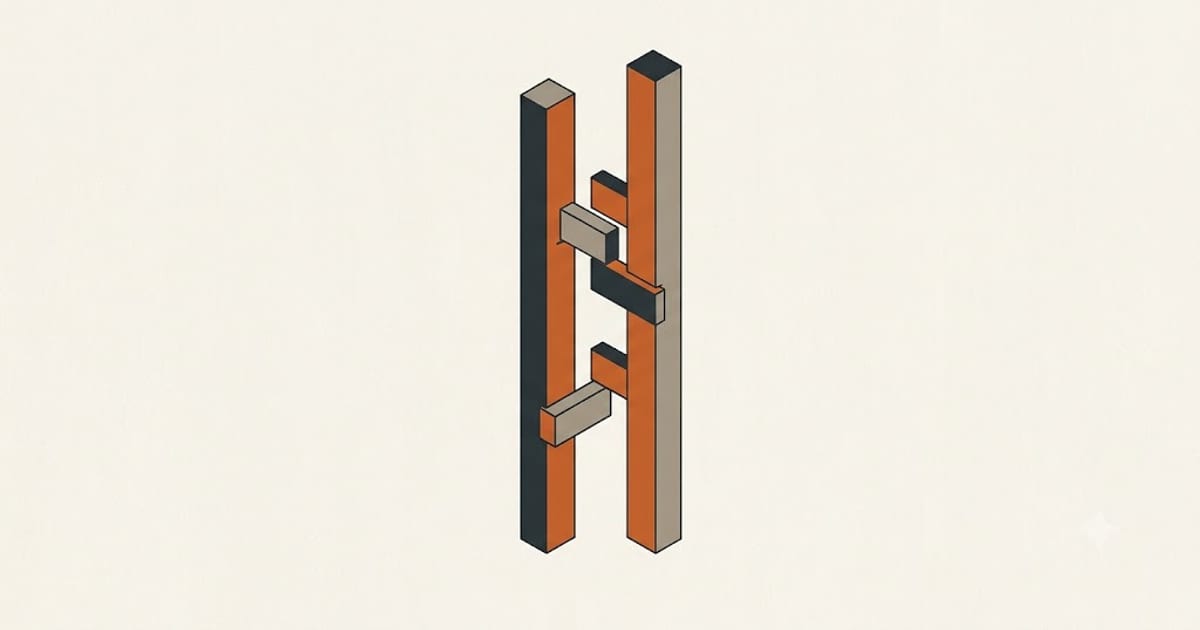
A deck has one connection carrying half of everything on it. When decks fail catastrophically — the kind that makes the news — it is almost always the ledger separating from the house, and it happens without warning because there is nothing to see beforehand.
The two causes are the same two every time: nails instead of bolts, and no flashing.
Nails are not a ledger fastener
Nails hold in withdrawal by friction alone, and the load on a ledger is withdrawal — the deck pulling straight away from the wall. Wood shrinks, the nail loosens, and the connection degrades every year.
IRC R507.9 requires 1/2-inch lag screws or through bolts with washers. Through bolts are stronger and can be inspected from inside the rim joist; lag screws are used where the interior is finished and cannot be opened.
Deck screws are not lag screws. Structural screws with an evaluation report are acceptable where the report covers ledger attachment, and the report specifies the spacing — which is not the same as the lag screw spacing.
Spacing comes from the joist span
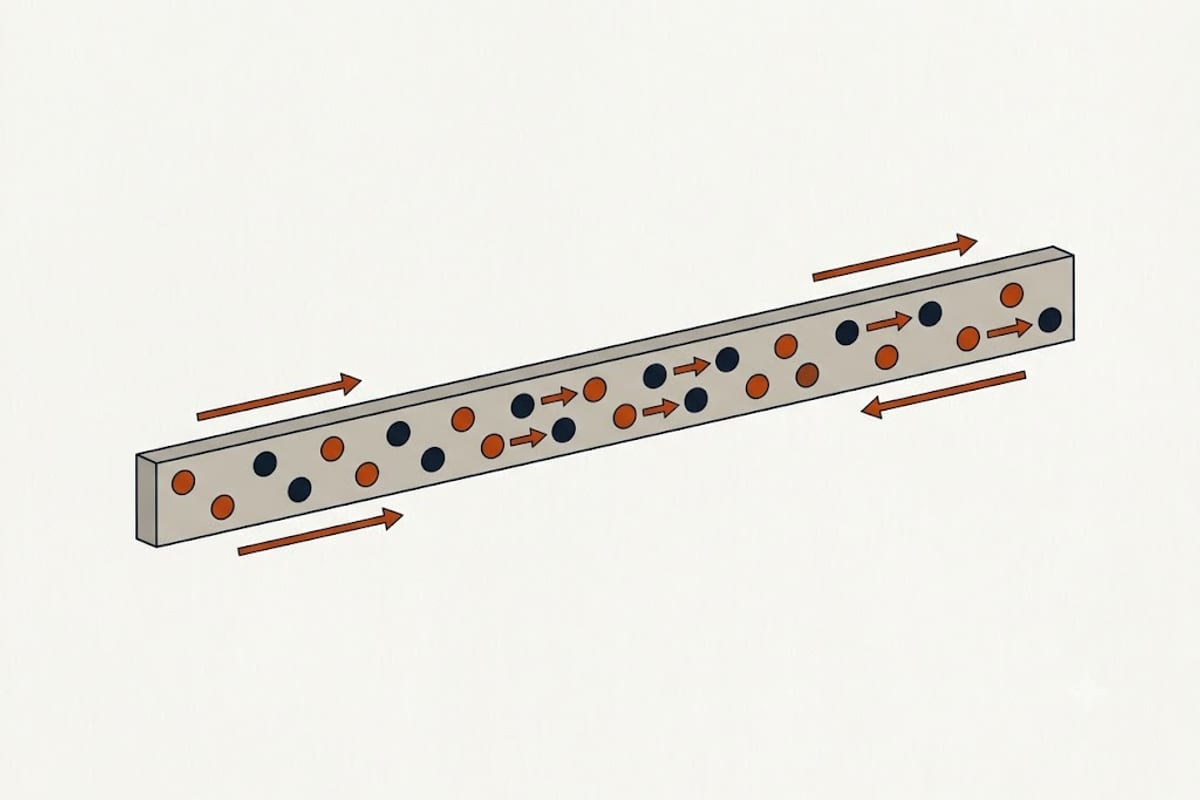
The ledger carries half the joist span, so the fastener spacing tightens as the joists get longer. IRC Table R507.9.1.3(1) gives the pattern; the shape of it is what matters:
- Short joist spans allow wider spacing, roughly two feet
- Long joist spans require fasteners closer together, and past a point a doubled row
- Fasteners are staggered in two rows, not lined up — a single row splits the ledger along the grain
Edge distances are specified too, and they are not decorative: too close to the top or bottom and the fastener splits out under load, too close to the end and the last joist has nothing holding it.
Flashing is the other half
Water running down the wall arrives at the top of the ledger and stops there. Without flashing it soaks into the end grain, into the sheathing behind, and into the rim joist.
Rot in a rim joist is invisible from both sides. The bolts stay tight because the wood around them has failed, not the steel — and that is precisely the failure that gives no warning.
The correct assembly, from the bottom up: house wrap, then the ledger, then Z-flashing over the top of the ledger and up behind the wrap, so water sheds outward onto the deck rather than behind it. Many jurisdictions also require a spacer or drainage gap so the ledger back can dry.
What you cannot attach a ledger to
Brick veneer. It is a rain screen, not structure. A ledger bolted to brick is attached to a wall that was never intended to carry it. The deck must be freestanding or the fasteners must reach the framing behind, which the veneer cavity usually prevents.
A cantilevered floor. Where the house floor overhangs the foundation, the rim joist is on the end of a cantilever and is not rated to take an additional load pulling on it.
Stucco or EIFS, without opening back to solid framing and rebuilding the water management.
In all three cases the answer is a freestanding deck with its own posts and beam along the house side. It costs more in footings and it removes the failure mode entirely.
Lateral load, the requirement people miss
R507.9.2 also requires resistance to lateral load — the deck being pushed away from the house sideways, which is what happens when a crowd moves together. This is satisfied with hold-down devices tying the deck framing to the house floor framing, and it is a separate detail from the vertical fasteners.
It is frequently omitted, and it is one of the first things an inspector looks for.
Inspecting an existing deck
From below, at the ledger: look for bolt heads with washers at regular staggered spacing. A row of nail heads, or lag screws without washers, is a deck to stay off until it is fixed.
Then look at the top of the ledger from the deck side for visible flashing, and probe the rim joist through any gap you can reach. Soft wood at the ledger is the end of the conversation — that deck comes off and gets rebuilt.