Most deck permits cost less than the lumber for one joist. The reason people skip them is not the fee — it is the schedule, the drawings, and a general sense that nobody will notice.
Somebody notices at resale, every time.
What it costs
| Jurisdiction type | Typical permit fee |
|---|---|
| Small rural county | $50–120 |
| Suburban municipality | $150–350 |
| Major metro | $300–700 |
| Valuation-based (common) | 1–2% of project value |
Valuation-based schedules are the ones that surprise people: a $14,000 deck at 1.5% is $210, and some jurisdictions add plan review at 25–65% of the permit fee on top.
Budget $200–500 all in for a typical residential deck, including plan review and the inspection re-visit that about a third of jobs need.
When one is required
The thresholds are set locally but the pattern is consistent across jurisdictions that adopt the IRC:
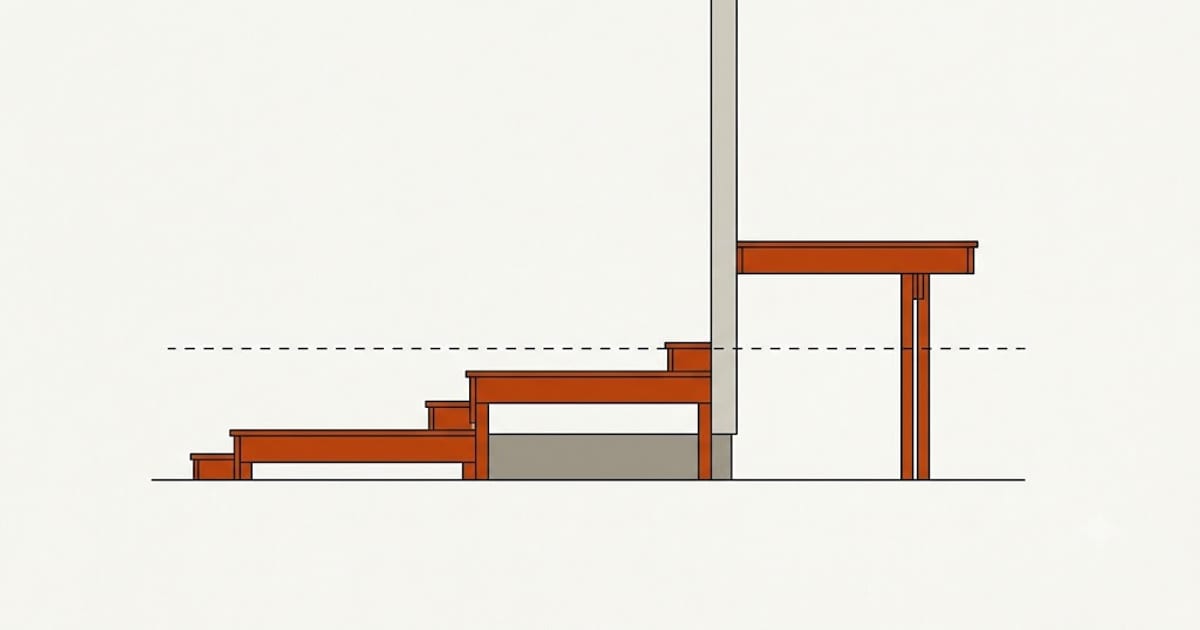
- More than 30 in above grade at any point — nearly universal, and this is the one that catches people. Thirty inches is barely more than knee height.
- Attached to the house — a ledger connection is a structural alteration to the dwelling, and most jurisdictions require a permit for one regardless of height.
- Over 200 ft² — common threshold for freestanding, ground-level decks.
- Any roof, pergola or electrical on the deck.
- Any HOA, coastal, wetland or historic overlay — separate approval on top of the building permit, and often the slower of the two.
What is usually exempt: a freestanding platform under 200 ft², under 30 in high, not attached, with no roof and no wiring. That is a patio deck, and it is the only common case that is genuinely permit-free.
What the inspections look at
Two or three visits, and they are not arbitrary:
Footing inspection, before concrete. The inspector measures hole depth against local frost depth and diameter against the load. This is the visit people skip by pouring early, and it is the one that forces excavation if you get it wrong.
Framing inspection, before decking goes on. Ledger bolts and their pattern, flashing above the ledger, joist size and spacing against the span table, hangers and their fasteners, post bases, beam-to-post connections, and lateral load devices.
Final, after railing and stairs. Guard height, the 4 in sphere rule, stair rise and run consistency, and the handrail graspability profile.
Every one of those is a published number rather than an opinion, which means the whole inspection is passable by reading the tables first — joist spans, footing sizing and ledger attachment cover most of it.
What you submit
For a typical deck: a site plan showing setbacks, a framing plan with member sizes and spacing, a section through the deck showing footing depth and post-to-beam connection, and the stair and guard details.
Hand-drawn on graph paper is accepted in most places for a residential deck. Many jurisdictions publish a prescriptive deck guide — often based on the DCA 6 document — and building to it exactly removes the plan review step entirely. Ask for that document by name before drawing anything.
The cost of not having one
At resale. Appraisers and buyers' inspectors look for permit records. An unpermitted deck typically produces one of three outcomes: a price reduction, a demand to permit it retroactively, or a demand to remove it. Retroactive permitting means exposing footings and opening the ledger for inspection — $2,000–6,000 of destructive work on a finished deck.
At claim time. A collapse or injury on an unpermitted structure gives the insurer a straightforward denial, and deck collapses injure people at a rate that keeps the industry's attention.
Unfinished square footage. Some jurisdictions will not close out the sale of a house with open permits or known unpermitted structures at all.
The one thing to do first
Call the building department and ask for the deck handout and the fee schedule. It takes ten minutes, it is free, and it tells you the local frost depth, the local soil bearing presumption and whether a lateral load connector is required — three numbers that change the framing take-off before you buy anything.