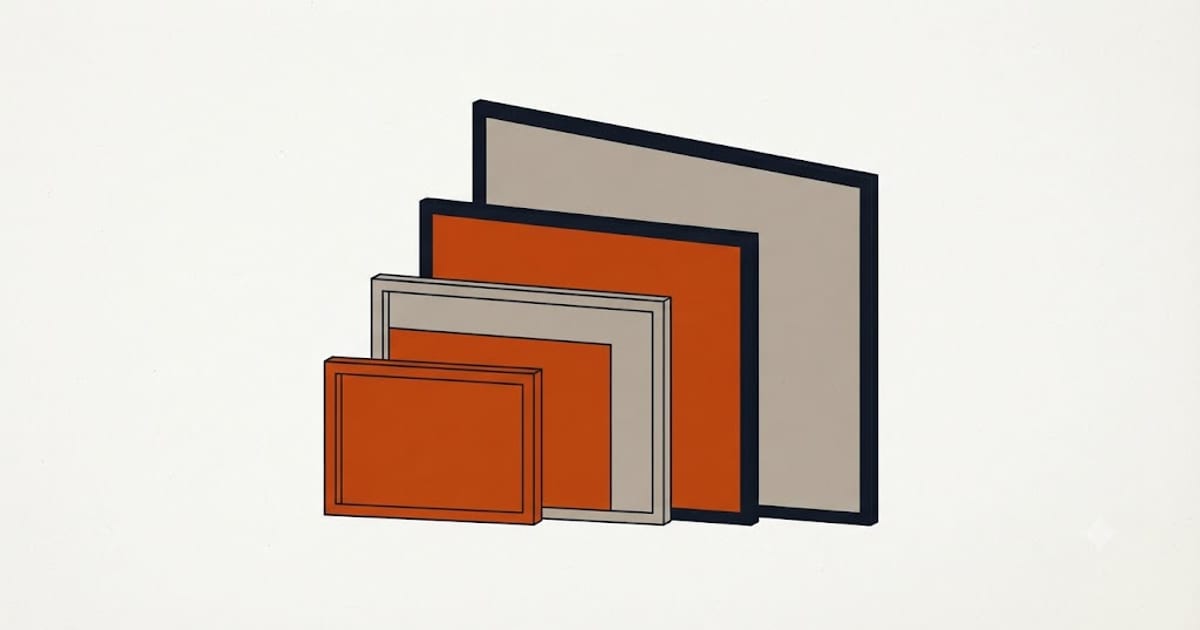
Deck quotes are given as a total for a size, and the totals hide the fact that cost per square foot falls as the deck grows and then rises again when the deck goes up in the air. A ground-level 16×20 can come in under an 8-foot-high 12×16.
Here are the common sizes, then the two factors that override them.
What each size costs
Pressure-treated framing and decking, ground level or one step up, railing where code requires it:
| Size | Sq ft | Pressure-treated | Composite decking on PT frame |
|---|---|---|---|
| 8×10 | 80 | $2,400 – 4,000 | $3,600 – 6,000 |
| 10×12 | 120 | $3,300 – 5,400 | $5,000 – 8,200 |
| 12×12 | 144 | $3,800 – 6,200 | $5,800 – 9,400 |
| 12×16 | 192 | $4,800 – 7,900 | $7,300 – 12,000 |
| 14×20 | 280 | $6,700 – 11,000 | $10,200 – 16,800 |
| 16×20 | 320 | $7,500 – 12,500 | $11,500 – 19,000 |
| 20×24 | 480 | $10,600 – 17,800 | $16,300 – 27,000 |
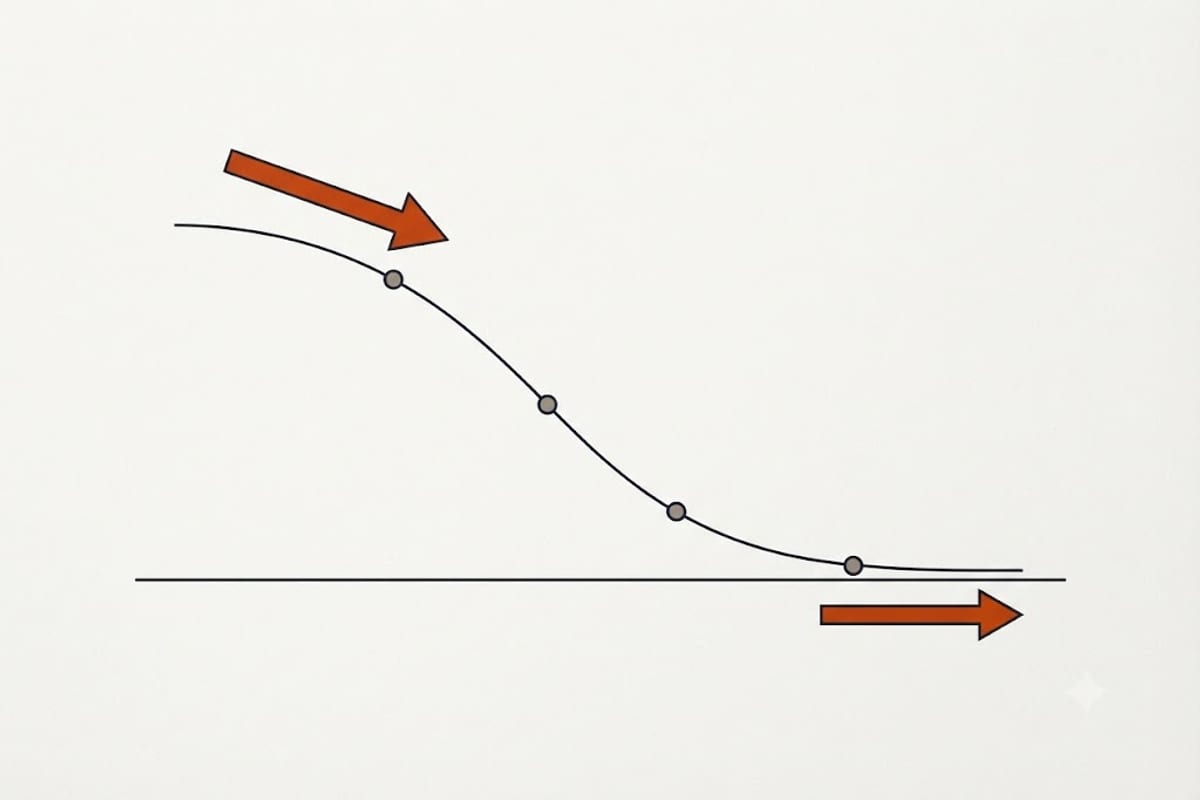
Typical US contractor pricing at the time of writing, not quotes. That works out to roughly $30 – 40/sq ft in pressure-treated and $45 – 60/sq ft in composite — and the per-square-foot figure drifts down as the deck grows, because footings, the ledger, permits and mobilisation are near-fixed. See cost to build a deck per square foot for what sits inside that rate.
The two factors that beat size
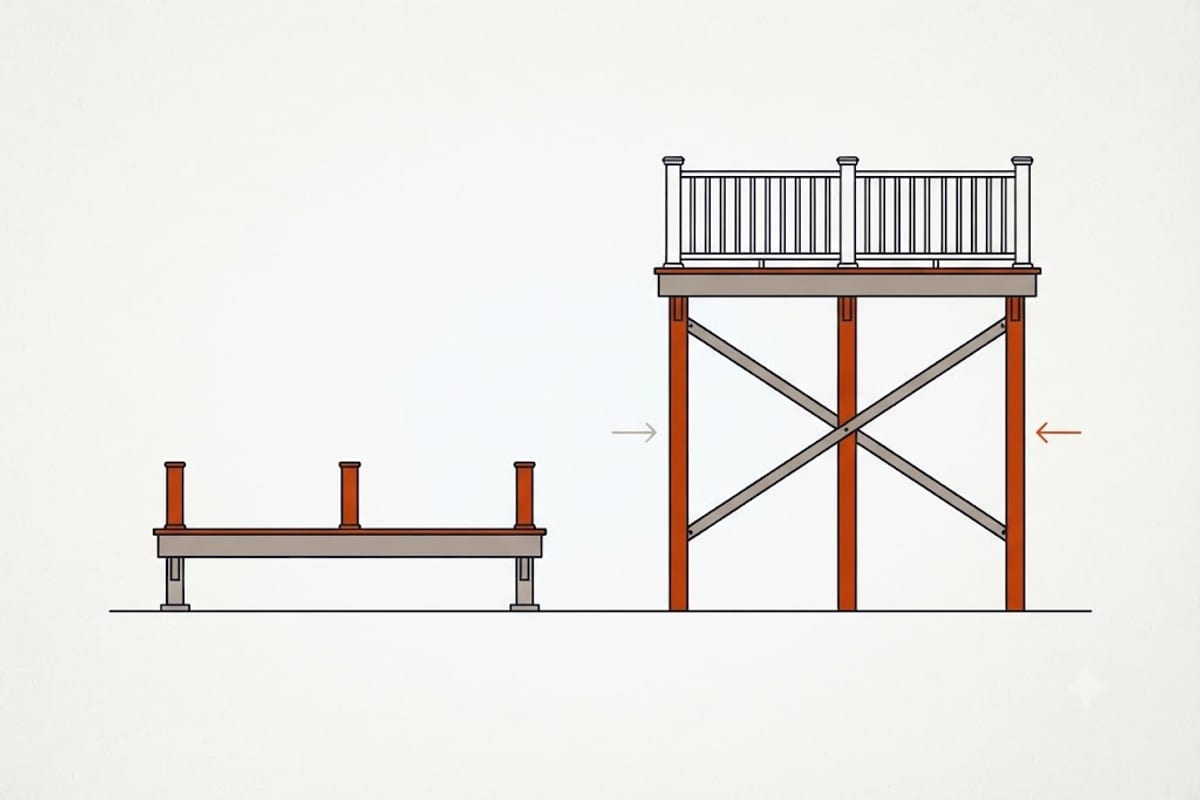
Height. This is the big one. A deck more than about 30 inches above grade needs guardrails all round, longer posts, usually diagonal bracing, deeper footings carrying more load, and stairs with their own footing and railing. Going from one step up to eight feet up on the same footprint routinely adds 30–60%.
Above roughly 6 feet the framing stops being a deck problem and starts being a structural one — post sizing, lateral bracing and beam depth all step up. See deck post size by height.
Stairs. A single tread down to grade is nothing. A full flight from an eight-foot deck is a stringer layout, a landing pad, a footing, and a railing on both sides — commonly $1,500 – 4,000 on its own. Two flights doubles it. See deck stair stringer layout and deck stair railing cost.
Between them, height and stairs move a quote further than adding four feet in either direction ever will.
What else moves it
- Decking material. Composite adds roughly 50% to the total, all of it in the boards — see composite vs pressure-treated cost.
- Railing. Pressure-treated railing is cheap. Aluminium, cable and glass run $60 – 200 per linear foot installed and can rival the deck's framing cost on a large perimeter.
- Footings. Count and depth are set by soil and frost line, not by preference — see deck footing size by soil bearing and frost depth by state.
- Access. A back yard with no gate wide enough for a mini-excavator means footings dug by hand. That is a real line item nobody puts on a website.
- Permit and inspection. Usually $150 – 600, and required more often than people assume — see deck permit cost and when you need one.
Where the money goes
On a mid-size ground-level pressure-treated deck:
| Line | Share |
|---|---|
| Labour | ~40 – 50% |
| Decking boards | ~15 – 25% |
| Framing lumber | ~12 – 18% |
| Footings and concrete | ~6 – 10% |
| Fasteners, hangers, flashing | ~5 – 8% |
| Permit | ~2 – 4% |
Labour is the largest line, which is why the ground-level/elevated distinction matters so much: elevation buys nothing you can see and costs a great deal of time.
Comparing quotes
Get every quote to state size, height above grade, decking material, railing type and stair count. Two quotes that differ on any of those five are not quotes for the same deck, and the totals cannot be compared.
If you are deciding whether to build at all, is a deck worth it for resale has the recovery figures.
The short version
Budget $30 – 40/sq ft in pressure-treated, $45–60 in composite, on a ground-level build. Then ask how high it sits and how many stairs it needs, because those two answers change the price more than the footprint does.